
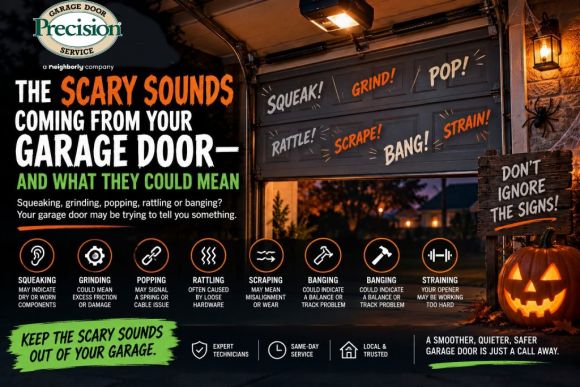
Squeaking, Grinding, Popping, Rattling or Banging? Your Garage Door May Be Trying to Tell You Something
October is the season for spooky sounds. Creaking doors, strange rattles, unexpected bangs and eerie squeaks may fit right in with Halloween, but when those sounds are coming from your garage door, they shouldn’t automatically be dismissed as part of the season.
Your garage door is one of the largest and most frequently operated moving systems in your home. Springs, rollers, cables, tracks, hinges, and the garage door opener all work together every time the door travels up or down.
When everything is operating properly, that movement should generally be relatively smooth and consistent. So when your normally quiet garage door suddenly begins squeaking, grinding, popping, rattling, scraping, banging, or sounding like the opener is struggling, it may be trying to tell you something.
Some noises can come from relatively minor maintenance issues. Others may indicate worn or damaged components that should be inspected before they contribute to a larger failure.
For San Antonio homeowners, knowing the difference can help you determine when it’s time to call Precision Garage Door of San Antonio.
Why Garage Doors Start Making Strange Noises
A garage door isn’t a single piece of equipment. It’s a complete system containing numerous moving parts, including:
- Springs
- Rollers
- Hinges
- Tracks
- Cables
- Bearings
- Drums
- Brackets
- Hardware
- Weather seals
- Garage door opener components
Many of these parts experience significant movement, tension, and repeated cycles. Open your garage door four times per day, and that’s more than 1,400 cycles in a year.
Over time, components can wear, lubrication can diminish, hardware can loosen, and parts can move out of alignment. San Antonio’s prolonged heat and changing weather conditions can also be hard on exterior components and seals.
Noise is sometimes one of the first noticeable clues that something has changed. The key is figuring out what kind of noise you’re hearing.
1. Squeaking: Your Garage Door Sounds Like a Haunted House
Squeeeeeak. If opening the garage sounds like the entrance to a haunted mansion, the noise may be coming from moving components such as rollers, hinges or other hardware. A garage door has numerous pivot and contact points. As components age or lubrication becomes insufficient, movement can become noisier.
Possible sources of squeaking can include:
- Hinges
- Rollers
- Bearings
- Springs
- Other moving hardware
When should you be concerned?
An occasional minor squeak isn’t necessarily an emergency. But pay attention when the squeaking is:
- New
- Getting progressively louder
- Accompanied by jerky movement
- Coming from one specific area
- Combined with visible wear or damage
Noise can sometimes be the symptom rather than the actual problem. If the door is also moving differently than it used to, having the system inspected is a good idea.
2. Grinding: Something May Not Be Moving the Way It Should
A grinding garage door deserves attention.
Grinding can potentially be associated with rollers, tracks, opener components, or other parts experiencing abnormal friction or wear.
You may hear grinding while the door:
- Begins opening
- Moves through the tracks
- Reaches the top
- Begins closing
- Reaches the floor
Listen to where the sound seems to originate.
- Is it coming from the sides of the door? – Rollers or tracks may warrant inspection.
- Is it coming from overhead? – The opener or another component may be involved.
- Does the door move roughly while grinding? – That’s another reason to stop treating the noise as merely an annoyance. Continuing to operate a door when components aren’t moving properly can potentially contribute to additional wear.
3. Popping: Don’t Ignore Sudden, Sharp Sounds
A loud POP! coming from the garage can be startling. And unlike a little squeaking, a sudden pop may deserve more immediate attention. Garage doors use spring systems to counterbalance the substantial weight of the door. Problems involving springs or other components under tension can sometimes produce loud noises.
If you hear a significant pop and then notice that the garage door:
- Won’t open
- Only opens a few inches
- Feels unusually heavy
- Opens unevenly
- Has a visible gap in a spring
- Causes the opener to struggle
Stop repeatedly operating the door and have it inspected. Garage door springs are under significant tension and should not be treated as a DIY repair project.
4. Rattling: Is Something Coming Loose?
Rattle. Rattle. Rattle. Your garage door shouldn’t sound like a toolbox being shaken every time it moves. Because a garage door operates repeatedly, vibration can contribute to loose or worn hardware over time.
Rattling could potentially involve:
- Hinges
- Brackets
- Tracks or track hardware
- Rollers
- Door sections
- Opener components
- Other fasteners or hardware
The important thing is to determine why the door is rattling rather than simply accepting it as normal. If the rattling is becoming louder or is accompanied by visible movement in components that should remain secure, schedule an inspection.
5. Scraping: Something May Be Rubbing Where It Shouldn’t
A scraping sound can be particularly unpleasant because it often sounds like metal dragging against metal.
Possible causes can include components that are:
- Worn
- Damaged
- Misaligned
- Bent
- Moving incorrectly within the track system
You may also notice the door:
- Moving unevenly
- Shaking
- Appearing crooked
- Slowing at a certain point
- Catching during operation
A door that appears crooked deserves particular attention. Garage doors depend on coordinated movement between the two sides of the system. If something is causing the door to travel unevenly, continuing to operate it can potentially make the situation worse.
6. Banging: That Isn’t a Normal Way for a Garage Door to Stop
BANG! If your garage door slams, bangs, or makes a heavy impact sound while opening or closing, don’t assume that’s simply how an older garage door operates.
Possible issues may involve:
- Springs
- Door balance
- Loose components
- Rollers
- Tracks
- Opener settings or operation
- Other mechanical components
A properly functioning garage door system should control the movement of the door. A door that drops, slams or moves unpredictably should be professionally inspected.
7. Straining: Listen to Your Garage Door Opener
Not every concerning sound comes from the door itself. Sometimes the garage door opener sounds like it’s working much harder than it used to.
You may hear:
- Humming
- Straining
- Groaning
- Motor noise
- Changes in pitch
- Slower operation
It’s tempting to immediately assume the opener needs to be replaced. But remember: The opener isn’t supposed to do all the work of lifting a heavy garage door by itself. The garage door’s spring system helps counterbalance the weight of the door.
If the door becomes difficult to move because of spring, roller, track, balance or other mechanical problems, the opener may have to work harder. That means an opener that sounds strained could sometimes be pointing to a problem elsewhere in the garage door system.
8. Clicking but Nothing Happens
You press the remote. Click. Nothing.
Or perhaps you hear the opener activate, but the garage door doesn’t move normally. There are several possible reasons for an opener failing to operate the door correctly, and not all of them mean the motor itself has failed.
Depending on the symptoms, the problem could involve the:
- Opener
- Door hardware
- Spring system
- Remote or controls
- Safety system
- Power supply
- Other mechanical or electrical components
If the opener is clearly attempting to operate a door that isn’t moving correctly, avoid repeatedly pressing the button in hopes that it will eventually work. Determine what’s preventing normal operation.
9. A Sudden Bang Followed by a Door That Won’t Open
This combination is especially important. You hear a loud noise from the garage. Later, you try to leave for work. The opener starts, but the door barely moves, or doesn’t move at all.
One potential culprit is the spring system. A garage door can weigh hundreds of pounds depending on its size and construction. Springs counterbalance much of that weight so the system can operate properly. If a spring fails, the door may suddenly become extremely difficult to lift.
Don’t force it. And don’t repeatedly operate the opener in an attempt to make it lift a door that has suddenly become much heavier. Have the system inspected.
10. Noise Plus a Crooked Door Is a Bigger Warning Sign
Noise by itself provides one clue. Noise combined with unusual movement provides another.
Pay particular attention if your garage door is:
- Crooked
- Uneven
- Shaking
- Jerking
- Hesitating
- Getting stuck
- Moving more slowly than normal
A garage door relies on multiple components working together. When one part isn’t functioning properly, other parts may experience additional stress. That’s one reason early diagnosis can matter.
“My Garage Door Has Always Been Loud”
We hear variations of this all the time. Some garage doors and opener systems are naturally louder than others, particularly older systems. What matters most is change.
Ask yourself: Does it sound different than it did six months ago? If the answer is yes, something may have changed mechanically.
- Maybe the squeaking became grinding.
- Maybe a minor vibration became rattling.
- Maybe the opener started sounding strained.
- Maybe the door now shakes slightly as it moves.
Those changes are worth investigating.
Can You Lubricate a Noisy Garage Door Yourself?
Certain garage door components may require periodic lubrication according to manufacturer recommendations. But homeowners should be careful about assuming that lubricant fixes every noise.
If a component is:
- Broken
- Bent
- Severely worn
- Loose
- Misaligned
- Improperly adjusted
…spraying lubricant on it doesn’t correct the underlying problem. And some garage door components, particularly springs, cables, brackets, and other parts associated with high tension, can be hazardous to adjust or repair without appropriate training and equipment. If you’re unsure what’s causing the noise, identifying the underlying problem should come first.
Don’t Try to Silence a Warning Sign
One of the biggest mistakes homeowners can make is focusing exclusively on getting rid of the sound. Imagine your car suddenly develops a grinding noise.
Your first question probably wouldn’t be: “How do I make the noise quieter?”
It would be: “What’s causing that?”
Treat your garage door the same way. The sound may simply be the system’s way of telling you that something needs attention.
The Sounds That Deserve Faster Attention
Not every squeak requires an emergency service call. But certain combinations of sounds and symptoms deserve quicker attention.
Contact a garage door professional if you experience:
- A loud pop followed by difficulty opening
- Grinding combined with rough movement
- Scraping combined with a crooked door
- Banging or slamming during operation
- An opener that suddenly sounds severely strained
- A door that shakes or jerks
- A door that starts dropping unexpectedly
- Visible cable problems
- A visibly damaged spring
- A door that won’t fully open or close
- A significant change in how the system sounds or operates
If the door appears unstable or a component looks damaged, stop operating it until it can be evaluated.
What NOT to DIY on a Garage Door
Homeowners can certainly perform basic visual checks and routine maintenance recommended by their garage door manufacturer. But garage door systems contain components under substantial tension. In particular, springs and cables should be treated with caution.
Avoid attempting to:
- Adjust spring tension
- Remove springs
- Replace torsion springs without appropriate training
- Repair loaded cables
- Loosen brackets connected to high-tension components
- Force a crooked door back onto a track
A garage door repair isn’t worth risking a serious injury.
A Quick Garage Door “Sound Check” for October
October is a great month to spend a few minutes actually listening to your garage door. Stand safely inside the garage and operate the door normally.
Listen as it:
Starts opening
Does it hesitate, jerk or make a loud initial noise?
Travels upward
Do you hear grinding, squeaking, rattling or scraping?
Reaches the open position
Does it stop smoothly?
Begins closing
Does the movement remain controlled?
Travels downward
Does either side appear to move differently?
Reaches the floor
Does it close smoothly, or does it slam or bang? Then step back and visually observe the system without touching moving components. You’re looking for changes from normal operation, not trying to diagnose or repair high-tension parts yourself.
Preventative Maintenance Can Help Catch Problems Earlier
The best garage door problem is often the one you identify before the door stops working completely. Preventative maintenance and professional inspections can help identify worn or damaged components before they become more disruptive.
Precision Garage Door of San Antonio performs a 25-point safety inspection as part of its repair process and arrives with fully stocked trucks designed to allow technicians to complete many repairs during the initial visit.
A professional inspection can evaluate components such as:
- Springs
- Rollers
- Cables
- Tracks
- Hinges
- Hardware
- Door balance
- Safety systems
- Garage door opener operation
This is particularly useful when your garage door is still working but doesn’t sound or feel like it used to.
Why October Is a Great Time for a Garage Door Checkup in San Antonio
October makes sense for more than the Halloween connection. Your garage door has just spent months operating through another hot San Antonio summer.
At the same time, you’re heading into a busy season. Over the next several months, your garage may see increased activity from:
- Halloween gatherings
- Thanksgiving guests
- Holiday shopping
- Package deliveries
- Holiday travel
- Family visiting
- More time spent at home
The last thing you want is a garage door failure when your car is inside and you’re trying to leave for Thanksgiving dinner or catch a flight. October gives you an opportunity to address unusual noises before the holiday season arrives.
What’s Your Garage Door Trying to Tell You?
Your garage door can’t send you a text message saying: “One of my rollers isn’t moving correctly.”
It can’t tell you: “I’m getting harder for the opener to lift.”
And it can’t schedule its own service appointment. Instead, sometimes it communicates through sound.
Squeaking?
Something may need maintenance or inspection.
Grinding?
Something may be experiencing excessive friction or wear.
Popping?
A spring or another component may require attention.
Rattling?
Hardware or another part may be loose or worn.
Scraping?
Something may be rubbing, damaged or misaligned.
Banging?
The door may not be moving or stopping normally.
Straining?
The opener, or the door it’s trying to move, may be struggling. The important question isn’t simply “How do I stop the noise?” It’s, “Why did the noise start?”
Don’t Let a Scary Garage Door Sound Turn Into a Scary Repair
Halloween is supposed to have scary noises. Your garage door isn’t.
If your garage door has suddenly started squeaking, grinding, popping, rattling, scraping, banging or sounding like it’s struggling every time it operates, don’t wait until the door refuses to open.
The team at Precision Garage Door of San Antonio provides garage door repair, spring repair, opener repair, and other garage door services throughout the Greater San Antonio area, with same-day service available.
Whether the problem turns out to be relatively minor or something requiring immediate repair, finding the cause early can help you make an informed decision before you’re stuck with a garage door that won’t move.
This October, the only scary sounds around your house should be coming from the Halloween decorations, not your garage door. Contact Us Today for your free estimate or evaluation.